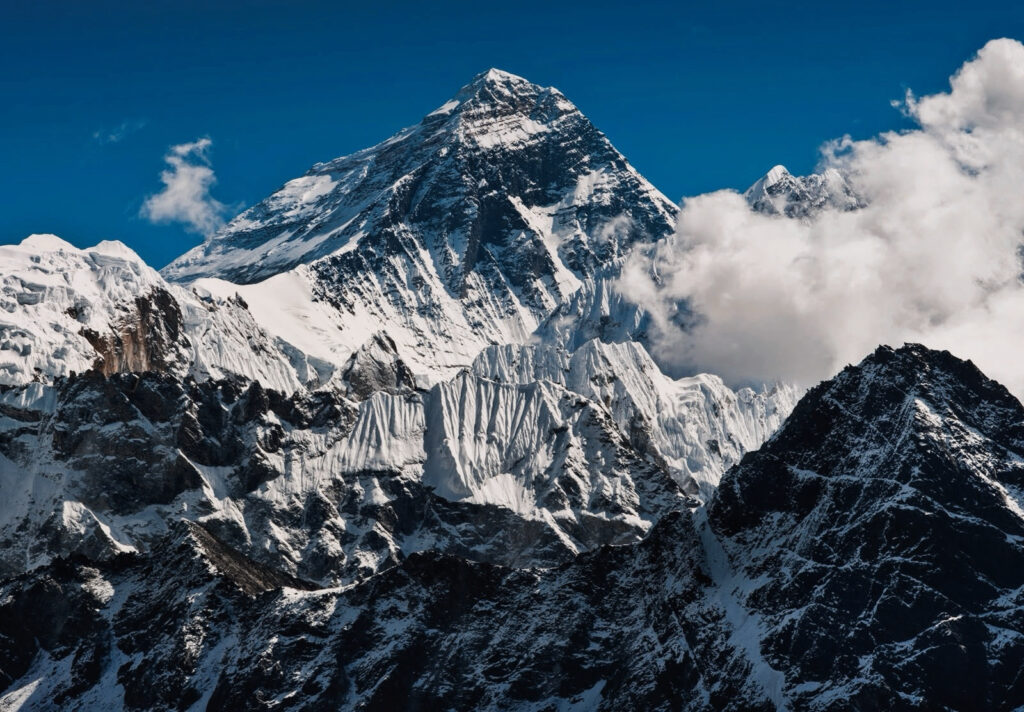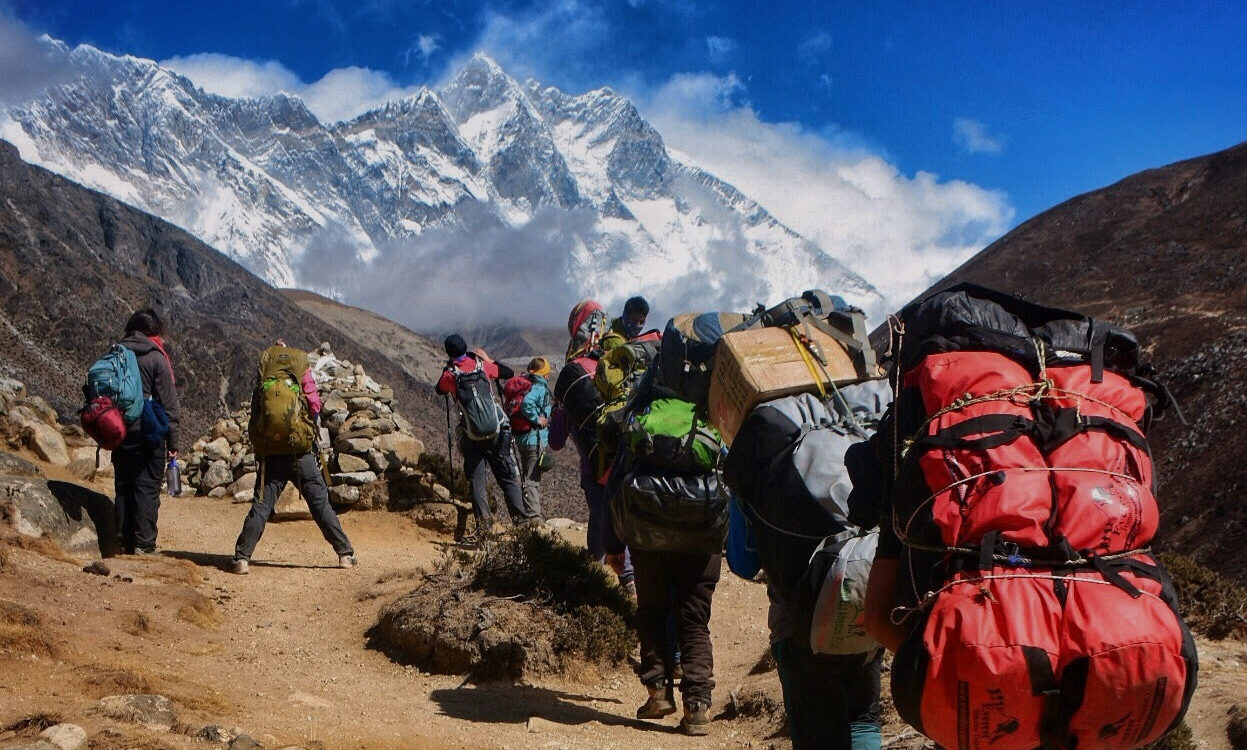
In the Khumbu Valley, before the altitude hits or the wind slices one’s skin, flashes of blue, white, red, green, and yellow appear everywhere on the trek to Everest Base Camp.
Stretching across suspension bridges, wrapping around stupas, tangled in rooftop lines, and draped along exposed ridgelines are prayer flags—one of the most recognizable features of the Himalayan landscape and a signal that this region is as much cultural terrain as physical geography.
Known locally as lungta, prayer flags are often photographed and explained as “simple decoration,” their rich history reduced and framed as mere aesthetics. The lungta are a living tradition rooted in Tibetan Buddhism and a devotion to community, hope, and shared wellbeing. As Sagarmatha National Park hosts more trekkers each year, the flags have become one of the few constants in a region rapidly evolving under the pressures of global tourism and commercialization. As the Khumbu adapts to a booming trekking economy marked by the construction of new company-owned teahouses, helicopter traffic, and a growing market for curated “Everest experiences,” many in the region worry that the cultural fabric and their way of life in the valley are changing just as quickly as the physical one.
Against this backdrop, the flags stand out, brightly and persistently—a comforting constant in a Himalayan landscape increasingly commodified for international thrill-seekers.
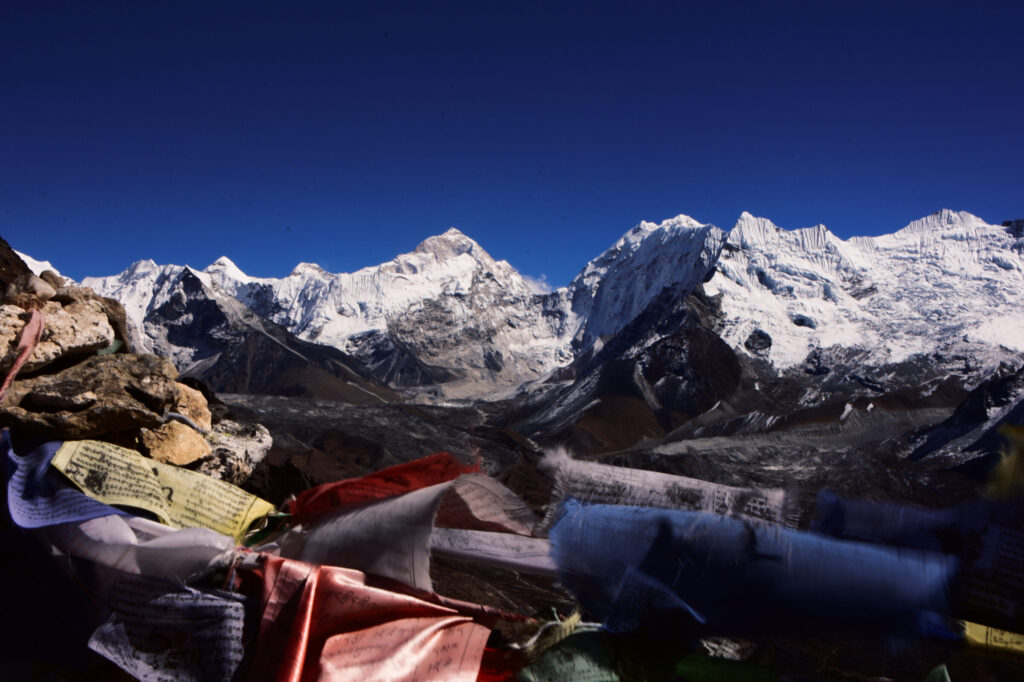
Each flag’s color is assigned to a natural element: blue aligns with the sky and space, white is associated with air and wind, red represents fire, green stands for water, yellow symbolizes earth. Hung intentionally in this sequence, the flags are meant to balance environmental energies and foster a sense of harmony for anyone passing beneath them.
Locals believe that when the wind pushes through the flags, the blessings and mantras printed on them are released into the world. The gradual fading of the cloth is understood not as decay but as evidence that the prayers have been carried away to those who need them.
For households across the Khumbu, the act of hanging prayer flags is woven into daily life. It is a show of faith, a request for protection, or simply a gesture of goodwill. The flags are a rare cultural unifying force: the practice crosses religious lines and is shared by Buddhists, Hindus, animists, and secular residents. At Base Camp, flags are regularly strung between tents in a traditional act of protection before teams ascend toward the Khumbu Icefall, and eventually, to Everest’s peak.
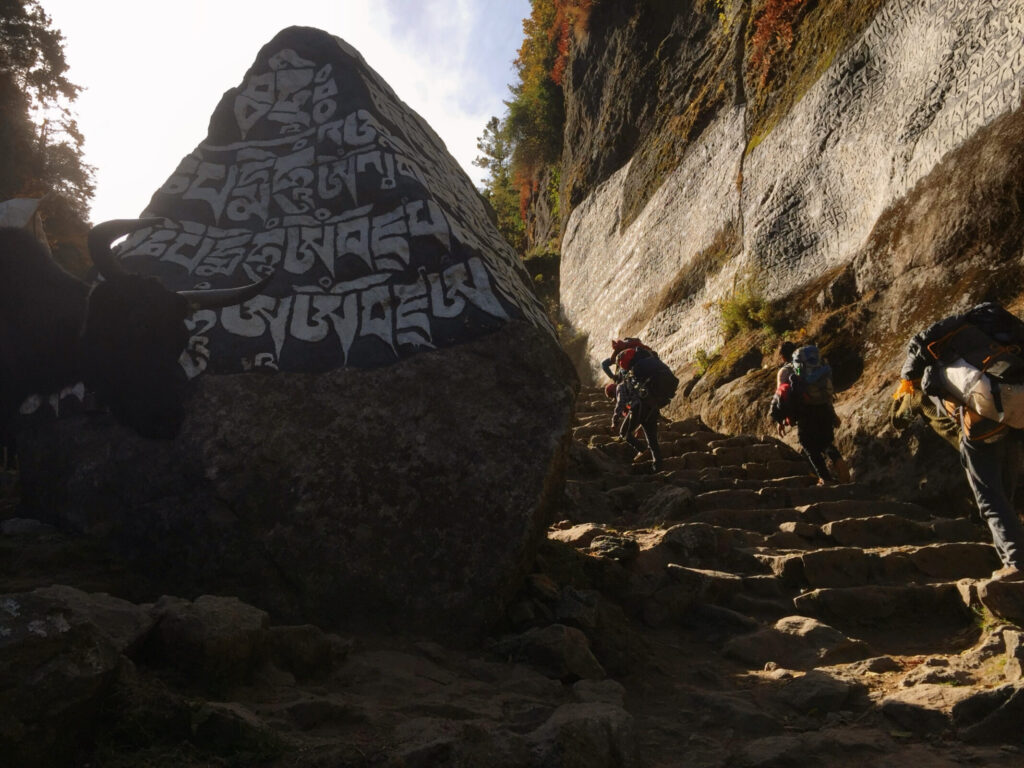
For Sherpas, Everest—Sagarmatha in Nepali—is not just the highest point on Earth; it is sacred ground. The mountain is believed to be alive, imposing spiritual authority. Behaving respectfully, therefore, is not only moral but karmically essential. Sherpas often speak of Everest with a level of reverence that outsiders rarely grasp.
Everest’s ascent to global fame rests far more on the labor and expertise of Sherpa climbers than most visitors ever realize. The world first took notice in 1953 when Tenzing Norgay stood alongside Sir Edmund Hillary on the summit of Everest. Since then, commercial expeditions have relied almost entirely on Sherpa labor. Sherpas fix ropes, carry supplies, prepare high camps, and shoulder a disproportionate amount of the risk involved in such a feat.
The dangers they face are well documented. Between 1924 and 2016, at least 114 Sherpas died on Everest. The first recorded casualties occurred in 1922, when seven Sherpas were killed during a British reconnaissance expedition. In 2014, 16 Sherpas died during an avalanche in the Khumbu Icefall. In 2015, after the earthquake-triggered avalanche struck Base Camp, 10 of the 22 deaths were Sherpas. Statisticians have compared the job to wartime service, and it remains one of the most dangerous professions in Nepal.
Just before reaching Everest Base Camp, trekkers pass a windswept hill near Lobuche lined with memorial cairns. The site overlooks one of the most dramatic landscapes in the region, and every stone structure tells a story. Among them is a memorial to Scott Fischer, the American guide who died in the 1996 disaster made famous in Jon Krakauer’s Into Thin Air. Fischer’s monument is wrapped in long strands of prayer flags, the surrounding cairns constructed by Sherpas and climbers alike. It has become one of the trek’s most sobering stops, a reminder of what the mountains can take.
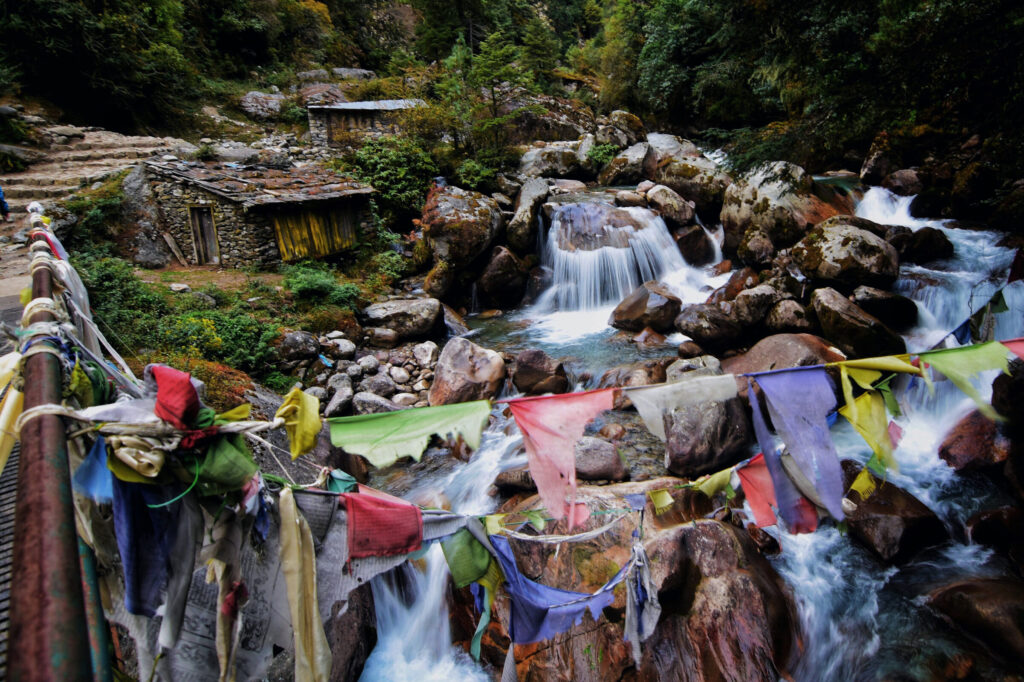
As prayer flags continue to flap in the wind, the Khumbu is changing fast. Tourism has improved local schools, health posts, and infrastructure, but it has also pushed the environment to its limits. The same visitors who feel inspired by the landscape often inadvertently contribute to the stresses placed upon it. More and more trekkers generate waste, strain water systems, and contribute to deforestation as teahouses burn wood to heat lodges.
Everest’s climbing economy reflects similar tensions. In 2024, Nepal issued 421 climbing permits for Everest. Mountaineering brought in roughly $5.9 million, yet overcrowding and environmental degradation have prompted Nepal’s Supreme Court to instruct authorities to limit the number of permits and ensure the mountain’s “capacity must be respected.” Beginning in September 2025, the government raised the fee for a peak-season Everest permit to $15,000. At the same time, Nepal has opened 97 lesser-known Himalayan peaks for free climbing in an effort to spread tourism more evenly across the country.
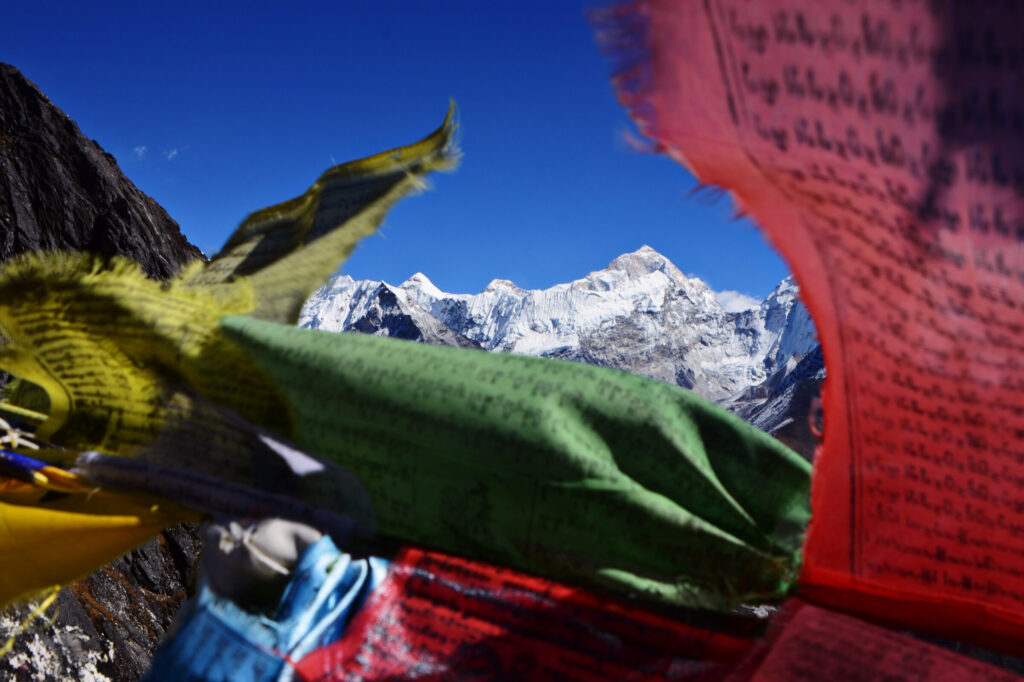
Much of the Everest Base Camp trek’s appeal lies in how ordinary life unfolds beside the extraordinary. Yaks carrying goods plod steadily along the trail. Sherpa children walk to school beneath strings of faded flags. Trekkers from every continent pass one another on steep switchbacks, while climbers sort gear in villages that would be remote outposts were it not for the constant flow of mountaineering traffic.
At Base Camp, prayer flags cut bright lines across the glacier-filled landscape. They frame the tents and flutter above the climbing teams preparing for their push upward. Just beyond, the Khumbu Icefall looms, shifting and creaking with every temperature change.
For trekkers, reaching Base Camp is often the culmination of months of planning. But the experience also serves as an education in the cultural systems that support mountaineering, the environmental strain carried by local communities, and the spiritual framework that shapes how Sherpas relate to the world’s highest peak.
It is often on the return journey down the valley that the meaning of the prayer flags becomes clearer. The same colors that marked the ascent seem sharper, more intentional. They no longer read as simple splashes of cloth but as part of a network of stories: of families, faith, loss, work, and ritual. The flags’ messages—sent into the wind for all beings, not only for those who hang them—echo the lessons the Khumbu leaves its visitors with.
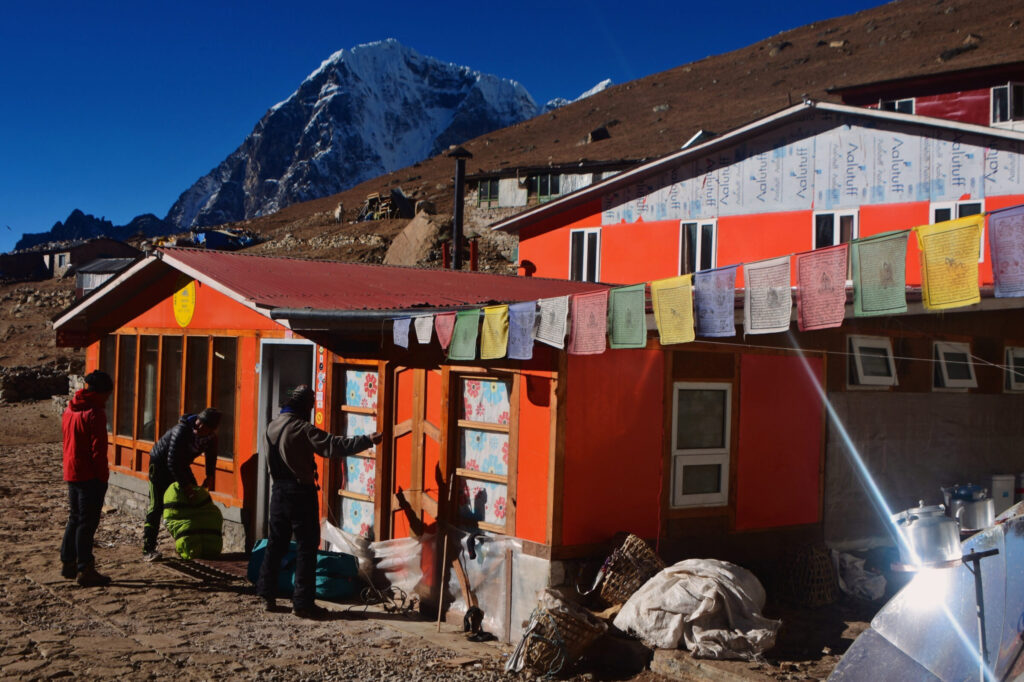
They capture the valley’s defining dilemma as a place shaped by spiritual depth, human resilience, and natural beauty, yet increasingly falling vulnerable to the caving pressures of global attention and commercialization. The valley stands as a reminder of a shared responsibility. Strung along the trails, the flags prompt visitors to reflect on how safeguarding this landscape is not only a matter of conservation but of protecting the cultural heritage woven into it.
In the Khumbu, the wind never stops moving. Neither do the stories carried by it.