
“It is us today. It will be you tomorrow.” With those words, the exiled Emperor of Ethiopia, Haile Selassie, concluded his address to the League of Nations delivered on June 30, 1936. Despite being honored as Time’s Person of the Year for his government’s efforts to rebuff Italian colonialism during the 1935 Second Italo-Ethiopian War, Western powers failed to meaningfully punish the Italian aggressors.
Following the invasion, the League of Nations agreed to impose sanctions on the regime of Benito Mussolini. However, these sanctions notably excluded oil and coal, energy resources whose scarcity would have severely weakened Italy’s ability to fight a prolonged war. Almost a century ago, the League of Nations confronted a challenge that draws parallels to the dilemma facing the European Union (EU) today. Namely, to reconcile the promotion of economic and diplomatic self-interest while continuing to uphold international law and supporting the territorial integrity of a weaker nation under threat from a much more powerful foe.
EU member states and the United Kingdom (UK) have bolstered Ukraine’s ability to resist Russia’s full-scale invasion over the past four years. The West has also offered symbolic support, such as President Volodymyr Zelenskyy being named Time’s 2022 Person of the Year, echoing the recognition granted to Selassie in 1936. Yet the EU’s broader response to Moscow has remained cautious, recalling the hesitations of the League of Nations. The bloc has delayed liquidating frozen Russian assets for the purpose of funding Ukraine, stopped short of a full embargo on Russian goods, and, in most cases, failed to meaningfully reform its militaries and defense industries to deter further Russian aggression in the absence of American support.
One example of this inaction is the EU’s refusal to transfer frozen Russian assets to Ukraine. Dr. Olena Lennon, a practitioner in residence of National Security at the University of New Haven, argued that the debate over liquidating seized Russian central bank assets held within the EU’s financial system boiled down to if the EU should “stop treating Russia as a legitimate state that has legal rights to have their assets protected in European banks,” and “look at Russia as an aggressive state supporting terrorism.”
Belgium and Germany fear that the seizure of foreign assets held in the EU would establish a dangerous precedent. Lennon speculates that this thinking results from the “assumption that Russia is a normal country…[despite having] broken every single rule.” By choosing only to freeze—rather than confiscate—Russia’s assets, Europe continues to limit its response against a state that has been accused of committing cultural genocide, has been indicted by the International Criminal Court (ICC) for illegal population transfers of children, and has killed over 15,000 civilians.
Dr. Anton Barbashin, a visiting researcher at the European Council on Foreign Relations, noted that within the EU, “there is no consensus that Europe is fighting Russia.” While most states, particularly Italy, France, and Germany, remain determined to support Ukraine, Hungary’s prime minister, Viktor Orbán, argued that EU states should focus on their own economies rather than on defending Ukraine, accusing his counterparts of warmongering instead of pursuing peace.
Barbashin added that the decision not to liquidate Russian assets is not about the “protection of Russian interests or Russian money in itself. It is just the protection of a service that Belgium provides to a foreign nation and its funds.” He raised Belgium’s concern that confiscating Russian assets could deter other countries from using the EU member states’ financial services if they feared that their assets could be seized if European authorities decided it was politically necessary.
***
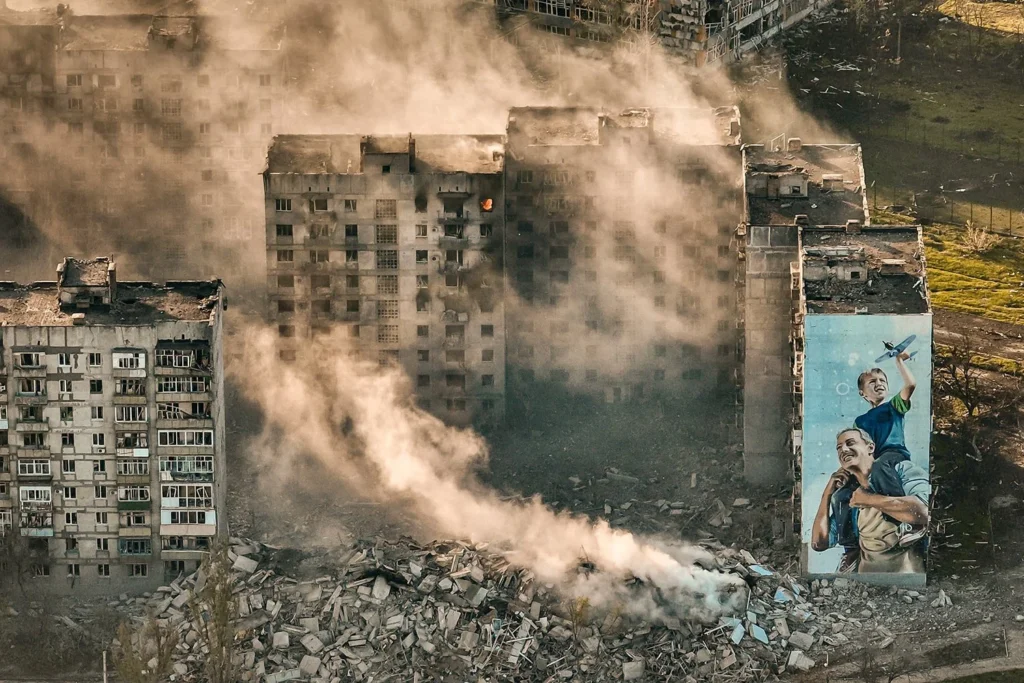
Kostia Melnuk, an international relations graduate student in Western Ukraine, has firsthand experience of Russia’s aggression. Despite studying 310 miles from the current line of contact, air raid sirens are a common occurrence. He believes that many in the West are not taking the Russian threat seriously enough and are mistaken in continuing trade with Russia. Russian exports to the EU have been reduced by 86% from the start of the war, yet this has still amounted to around 300 billion euros worth of Russian goods entering the EU since the start of the full-scale invasion on February 24, 2022. For instance, while Germany—the largest European importer of gas before the war—halted direct gas imports from Russia to its own detriment, a 2024 Reuters report found that as much as 13.7% of Germany’s gas was imported indirectly from Russia via other European states.
A reduction in dependence on Russian-supplied energy is not the only way a European country has incurred high costs due to the war effort. The often overlooked consequences of the Ukrainian refugee crisis, as well as the historical memory of deadly conflicts between the two nations, hold a significant place in the perception of Ukraine by the Polish public.
Illia Kovalchuk, a Ukrainian who relocated to Poland shortly after the start of the full-scale invasion, shared with The Politic that Polish attitudes towards Ukrainians have hardened over the course of the war amid rising tensions surrounding refugees. Initially, he recounted how “Polish people said, ‘of course we will help Ukrainians. We will accept them because we are both Slavic people.’” However, as the conflict dragged on, Kovalchuk claimed, “there [has] been a lot of hatred towards the Ukrainian nation” due to increased strain on Polish social safety nets.
Kovalchuk highlighted farmers’ protests over Ukrainian agricultural imports as further evidence of waning support. After the EU lifted tariffs on Ukrainian agricultural inputs in 2022, many Polish farmers struggled to compete, especially since, as a result of EU membership, Polish products have to undergo expensive quality controls, which Ukrainian products are not subject to.
***
In addition to avoiding certain punitive measures against Russia, another issue facing many European countries—especially those farther from Russia’s borders—is maintaining military readiness. Dr. Thomas Graham, a Fellow at the Council on Foreign Relations who advised the White House as part of the National Security Council, said that “European leaders will have extreme difficulty in persuading their publics that they need to spend more on defense, particularly as you move farther west.”
Among many EU citizens, willingness to fight for one’s country has declined sharply in recent decades. Even in Ukraine, a country at a state of war with an aggressor, attitudes towards men who avoid military service vary. Melnuk argued, however, that “if a person wants to live, they have the right to do so. No piece of land is worth a human life.”
This sentiment is echoed among many citizens of Western European countries, with a majority now saying they would not fight to defend their country in war, leaving countries such as Germany and the United Kingdom struggling to meet military recruitment targets.
In addition, many countries also struggle to fund the armies that are failing to recruit. Dr. Barbashin argued that support for increased defense spending remains weak across Western Europe, making the next five to seven years uncertain. “You have a situation where a large chunk of Europe does not see this war as their own war and believes that Russia only cares about Ukraine.” Despite a consensus among most European leaders on the need to reduce defense dependency on the U.S., the lack of concrete action, such as expensive but necessary military reforms, may continue to be a perennial issue due to European countries’ struggle to overcome their populations’ apathy towards a Russian threat.
Dr. Tim Haesebrouck, a Professor at Ghent University’s Institute for International and European Studies in Belgium, elucidated how European leaders have traditionally been overly reliant on the U.S. in the post-Cold War era: “It doesn’t make sense that a rich continent like Europe, or a rich group of countries like the European Union, is so highly dependent.” He argued that the Greenland crisis, in which President Trump challenged Danish sovereignty over Greenland and threatened to impose tariffs, was a wake-up call for Europe. “Something has irreversibly changed. I think the attitude in Europe is still that they want to stay Atlantic-aligned, but they at least need a plan B to reduce their dependency on the United States.”
Despite Europe’s recent push for greater strategic autonomy from the U.S., several barriers remain before the EU and UK can fill the role the U.S. has traditionally played in defending the continent. For one, supply issues remain a pressing concern. As Dr. Barbashin noted, “the most obvious problem is the European capacity to produce enough ammunition and arms to supply Ukraine’s needs.”
In addition, “there are issues when it comes to long-term planning, and a lot of that revolves around the understanding of what’s happening with the peace deal,” Dr. Barbashin highlighted. “The results of the peace deal will determine whether the European Union should be focusing on reconstruction or providing long-term financial support for Ukraine during continued warfare.”
***
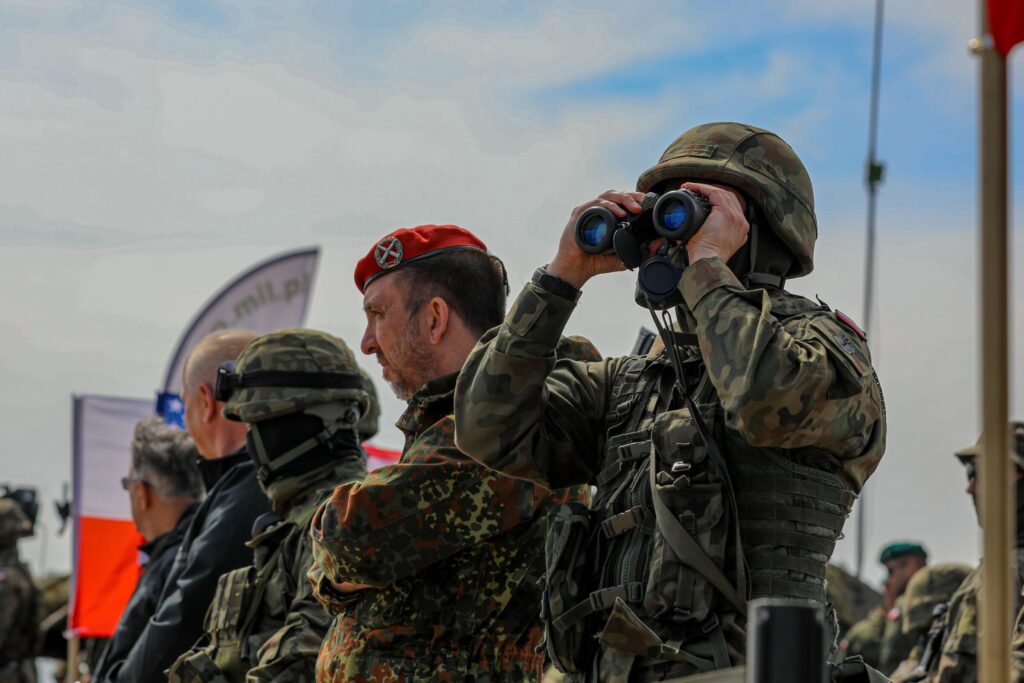
Following the Cold War, most European countries transitioned from maintaining large armed forces capable of fighting an equivalent power to creating forces capable of deploying abroad in specialized counterinsurgency and counterterrorism operations. This significantly hampers their ability to fight a conventional land war with Russia. The effectiveness of these new expeditionary forces during the war in Afghanistan has been critiqued by President Trump in February 2026, who accused non-American coalition forces of avoiding the front lines—despite over a thousand non-Americans perishing in the war. Regarding a possible transition to a force capable of fighting Russia independently, Dr. Graham speculated that “without American assistance and encouragement, [such a transition] will take longer. So that puts you in the five to 10 year range.”
Dr. Lennon stressed that the EU’s decentralized nature has created problems in enforcing economic boycotts against Russia. Speaking about the EU, she said, “It is an economic union, first and foremost…but it is fractured. Some of the members, like Hungary and Slovakia, that have not joined the sanctions regime continue to buy Russian energy and continue to prop up the Russian economy and its war machine.” This has forced European actors to form what Dr. Graham called a “coalition of the willing” full of staunch Ukraine supporters such as the UK, France, Italy, and Poland, as it has proved an impossibility for the entirety of NATO or the EU to agree on the proper response to the crisis in Ukraine. Furthermore, Dr. Haesebrouck noted how Europe consists of “different states with their own roles in their military, their own equipment, their own defense industries.” Due to the lack of economies of scale, European countries, he noted, “will always need to spend more to get the same military capabilities.”
Still, European countries have stepped up cooperation in an effort to improve efficiency. Dr. Haesebrouck notes that there have been “attempts at more coordination, for example, buying stuff together, training together, and having common maintenance.” He gives the example of Belgium and the Netherlands unifying their naval commands. In addition, as the idea of America presenting a nuclear deterrent to an invasion of Europe becomes increasingly uncertain, Dr. Graham speculated that “there will be some thought about how to extend the nuclear umbrella over Europe using the French and British [systems].”
Furthermore, Dr. Lennon rejected the fatalistic idea that the economic and military disadvantages that Ukraine and Europe face are the only deciding factor in a conflict with Russia. “Solidarity is currency. Unity is currency. Clarity of mission is currency. Motivation is currency, and we see all of those things adding up to Ukraine, against all odds, resisting Russian aggression.” While recognizing the political and economic strain that greater support for Ukraine would place on Europe’s economy and populace, she issued a stark warning that recalls the failure of the League of Nations to stop Italy’s conquest of Ethiopia—a failure that emboldened further aggression.“Without a doubt, Ukraine’s victory is expensive for Europe, but a Russian victory is a lot more expensive.”
When asked if he feels envious of his neighbors in Poland, Melnuk responded, “Of course… It’s unfair when you look at people who live peacefully, setting off fireworks on New Year’s Eve, seeing something beautiful in it, when for us fireworks are 40-50 kilograms of explosives blown up in the sky by UAVs.” He recalled that, at the beginning of the war, the piercing sound of air-raid sirens would incite fear as people rushed towards bunkers, but now those same sirens have become a common occurrence, and the inhabitants of his city barely react to them, carrying on with their day.