

Photo Credit: Skakel McCooey, Yale Daily News
In 424 colleges across 47 states—including over half of the Ivy Leagues—Diversity, Equity, and Inclusion (DEI) initiatives have been revised, reduced, and called into question over the past two years. From the renaming of affinity spaces to the removal of resources and faculty entirely, these changes largely result from the anti-DEI pressure of the Trump administration, not official legislation. Although Yale continues to evade Trump’s crosshairs, especially compared to peer institutions like Columbia or Harvard, the deteriorating national landscape leaves student leaders concerned for the futures of the affinity spaces and cultural centers that they hold dear.
“We are living in an existential moment,” said Birikti Kahsai, president of the Black Students Alliance at Yale (BSAY). “There’s a level of scrutiny as a result of the federal environment that we are in, and it definitely has an impact on operations and funding. It has been a very tight balancing act.”
Many consider higher education to be broadly at risk under the current administration. Retaliatory restrictions on federal funding have impacted universities nationwide, with Columbia University and Johns Hopkins University alone facing a combined $1.2 billion lost in federal support. Government bodies like the U.S. Department of Education face similar financial pressure and downsizing, hindering them from continuing the research and day-to-day operations which American universities rely on to thrive.
Amid these attacks, DEI has emerged as one of the easiest areas for the Trump administration to target, according to Dr. Archie Ervin, former chief diversity officer for both the Georgia Institute of Technology and the University of North Carolina at Chapel Hill, and former president of the National Association of Diversity Officers in Higher Education (NADOHE).
“Our nation is more than 250 years old, and only in the last 60 years has it been a legal principle that education is supposedly available irrespective of race, creed, color, and national origin,” Ervin said. “But in today’s climate…DEI is now defined as discrimination…By having this devil called DEI, there has been a lot of success in reframing these concepts as illegal. There’s nothing illegal about any of them.” n
The backlash from students has been swift and resounding. At institutions like the University of Michigan, which once prided itself on its reputation as a staunch defender of DEI, university president Santa Ono’s rapid reversal left students feeling betrayed and outraged. Ono ultimately resigned upon the conclusion of the 2024-25 academic year. Schools like Kent State University––whose history as the site of the murder of anti-war student protestors in 1970 stands as a troubling backdrop to the ideological battle waged today––staged a “funeral” march in all black for their LGBTQ+ Center, Women’s Center, and Multicultural Center after administrators announced they would shutter their doors.
“To lose those resources can feel very hurtful,” The Chronicle of Higher Education journalist Kate Hidalgo-Bellows said. “When I’ve spoken to students, they’re concerned about whether they’re going to be able to express their identity to the fullest extent on their campus…It just feels like the rug is being pulled from under them, after, especially since 2020, colleges and universities had rapidly expanded their DEI infrastructure, in part to student demands. Now it’s just going away in many places.”
As schools nationwide grapple with the impacts of this legislation, Yale’s position appears tenuous. Though Yale has remained largely untouched in terms of funding cuts and other demands from the Trump administration, Yale’s broader history as a site of social conservatism in tense political moments may concern underrepresented students. Recall the establishment of the American Eugenics Society at Yale by faculty in the 1920s amid a time of sweeping nativism, or the establishment of the conservative Federalist Society at Yale during the Reagan Era in 1982. In line with this history, it might seem all too easy for Yale to capitulate in advance to anti-DEI pressures, as many of its peer institutions have done. But could Yale feasibly square one such move with the prominence of its cultural centers on campus, and its current identity as an institution?
In many ways, the cultural centers—the Afro-American Cultural Center or “The House”, the Asian American Cultural Center (AACC), La Casa Cultural (La Casa), the Native American Cultural Center (NACC), and the Middle Eastern and North African Cultural Community (MENACC)—are some of Yale’s most distinctive student resources. No other institution within the Ivy League has physical, designated cultural spaces to the extent of those lining Crown St, and many Yalies—including every student interviewed for this article—point to these resources as one of their driving motivations in applying to and eventually matriculating to Yale.
“Probably the only thing that I remember about Bulldog Days was that BSAY and The House had this event,” Kahsai said. “It was a game night, and I got to meet a lot of different upperclassmen who continued to serve as mentors for me throughout my time here. Ultimately, it was the reason why I decided to commit to Yale. I felt like the community here was unmatched compared to a lot of other options.”
For Yale ‘25 Alum Ethan Estrada, who worked as a student coordinator and peer liaison for La Casa and received the Nakanishi Prize for race relations upon his graduation, La Casa helped combat feelings of insecurity as an underrepresented student on campus.
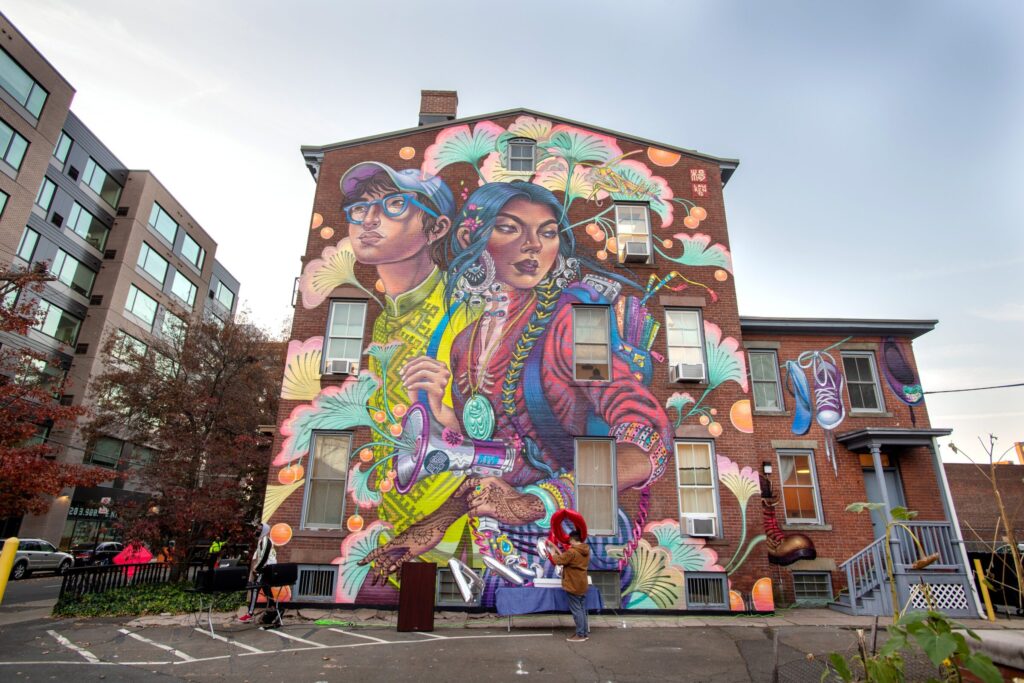
Photo Credit: The Asian American Cultural Center at Yale
“Especially when entering spaces that often felt unwelcoming or that there was something I was missing, [at La Casa] I always felt welcome and part of something,” Estrada said. “Yale can make you feel very disposable or exchangeable with another student, and to a degree, that’s true. But at the Cultural Centers, students are empowered to make the changes they want to see. You feel not only welcome, but empowered in this space.”
Empowerment proves key to the missions of the cultural centers, which emphasize not only “multicultural education” but also “student leadership development” in their offerings, according to the AACC’s website, for example. Taylor Dineyazhe, who serves as both a Peer Liaison for the NACC and the president of the Native and Indigenous Students at Yale (NISAY), said the visible models of Native success she found at the NACC inspire her outside of the classroom.
“Having that one specific community that you can tie back to your home and where you’re from, that makes you the person that you are…it really defines your time here at Yale,” Dineyazhe said. “Being in that kind of space is what inspired me to go out and do all the things that I’ve done so far. Seeing other Natives who have done amazing things…it’s inspirational to see and it’s something that continues to motivate me as a student to this day.”
Students like Miya Zhao, who works on the Historical, Artistic, and Cultural Resources Team of the AACC and serves as co-president of the Chinese-American Students Association (CASA), said that the cultural centers provided opportunities to both reflect on her own identity and learn more about others.
“People here are inherently curious, [and] it’s made me think more and be more prideful of my heritage and of my community,” Zhao said. “Sometimes, when we are minoritized, we focus on conserving our own culture,” Zhao said. “[Since] we each have our own spaces and can feel more secure within our own identities, [Yale] has now allowed us the privilege to understand other cultures so much better. Within our own informedness, we can inform others, and we build such a strong interconnected network that wants to help each other.”
Though students have expressed an understanding of the value of the cultural centers, recent developments may reveal that the administration places less emphasis on these merits. Multiple student representatives stated that they were aware of budget cuts at their respective cultural centers, though the Provost’s Office did not respond to a request for comment. Director of Multicultural Recruitment Dara Norwood stated that she “was not able to comment at this time,” and Dean of Student Engagement Burgwell Howard did not reply to multiple emails requesting comment. Associate Vice President for Institutional Equity and Accessibility, and University Title IX Coordinator Elizabeth Conklin said in an emailed statement that: “While we continuously monitor and comply with all federal and state laws, the core of our work and our commitment to supporting students is longstanding and remains steadfast.”
However, pressures are evidently mounting university-wide: Yale College Dean Pericles Lewis publicly announced reductions in Yale’s summer grants for students on financial aid, a move which was met with reproach from Yale College Council President and Vice President Andrew Boanoh and Jalen Bradley on November 12 in back-to-back email announcements.
“When compromises have to be made, who are the people or students that they’re willing to compromise the most?” Estrada asked. “It always seems to be that students of color and FGLI students are always the first under threat. How does that make a stable place for learning? To be able to do any type of intellectual work, you have to feel like you have a community, like you belong. That’s why cultural spaces are so important—because they provide forms of engagement, or modes of communities where students who did not feel so welcomed begin to engage with the group and feel, ‘Maybe there is a place for me.’”
Amid these challenges, students have already begun working within their organizations to protect their communities, according to Kahsai.
“All of us firmly believe that there is a need for the continued existence of affinity spaces, but it is also not lost on us that our presence is feeling more tenuous,” Kahsai said. “[We] know that we have a responsibility to preserve these spaces, and that is going to mean sometimes making tough decisions about the way that we operate. But as long as it keeps our end goal of surviving, it’s worth it.”
Students are not only organizing for the preservation of their individual communities. Dineyazhe explained that affinity student leaders from the Class of 2027 formed an “Intercultural Coalition” over the past summer, and began meeting with administrators this semester to express their concerns over the general state of DEI at Yale.
“Our main goal was to have these monthly meetings with administrators…and voice our concerns about how we felt like we were in the dark as student leaders about the issues that were going on,” Dineyazhe said. “A lot of us were in dialogues already beforehand about [it], but we weren’t ever encouraged to do something about it.”
Dineyazhe applauded the group for its commitment to cross-cultural advocacy.
“We’ll do whatever it [takes] to get the answer and the response that we want, which is something really inspirational to see,” said Dineyazhe. “Especially being a part of the NACC and being a part of a smaller community, because you see these people advocating for not only their community’s issue specifically, but [for] the broader community as well.”
Student activism led to the establishment of the cultural centers in the first place: BSAY proposed the creation of The House in 1967 as part of a broader reforms campaign, and the Asian American Students Alliance and Movimiento Estudiantil Chicano de Aztlán jointly organized for the creation of their spaces, which first emerged as a combined house in 1981. For MENA students, this history feels especially recent: the administration only answered student demands to create the MENACC a year ago, in 2024. MENACC Peer Liaison Basma Elbagory emphasized that despite this progress, many MENA issues continue to go unaddressed by the Yale administration today, from data collection inequities to a lack of adequate response to student harassment.
“I’ve seen how deeply impactful [the cultural centers] are when I experienced my first year without any, and how much better my life was at Yale during my sophomore and junior year, when I did have this space,” Elbagory said. “We’re not fully a cultural house yet, it’s still a cultural community. I would love to see Yale make that happen…It is vital for MENA students on campus to feel safe and supported, and there’s still a lot of work to be done to fulfill that.”
The cross-community organizing that students are engaging in today points to a long history of intersectional activism at Yale, according to LGBTQ Center Peer Liaison Diego Paz.
“It’s always been inherent in the cultural centers to find those solidarities,” Paz said. “As students today who inherit that history, I, for one, am always looking for ways to reach out and connect with all of the different centers, whether that’s the Office for International Students (OISS), the LGBTQ Center, or the Center for Students with Disabilities. [It’s about] bringing in these spaces that have always allowed underrepresented students to have a place and a voice in this university’s campus, and finding ways to bring us together to amplify that.”
Whether administrators will listen to students remains to be seen. Regardless, students and alumni like Estrada warned against the tragedy that it would be to erase these spaces for not only students who call them home, but the campus community as a whole.
“There’s not a cultural self that [students] inhabit, and leave at the door,” Estrada said. “They bring that everywhere, and they’re able to enrich the intellectual life just as much as the cultural life of this space. If you’re compromising these spaces, it really compromises the intellectual and academic for students of color at large—and not only for them, but for the entirety of Yale.”
CASA Co-President and AACC Peer Liaison Sophia Li also emphasized that any restrictions at the administrative level will only result in a cheapening of the gathering that students already participate in.
“The alternative world is that there are [still] going to be events,” Li said. “[They’re] not going to be as well-marketed, and [they’re] not going to be as well-supported. So, how much of the culture is going to be shared, without that type of support and backing from other funding sources or groups?”
Just as each student interviewed for this piece said they chose Yale at least in part because of its robust cultural resources, they each also expressed a commitment to fighting for them.
“Whatever direction this university goes, there will always exist communities of people that you will find a shared identity and a sense of community with,” Paz said. “[Moving forward] without a physical space is something that none of us want to be the future. But if it is, there will always be an opportunity to find others of a similar identity and community to you, even outside of those structured spaces, as historically we have done as queer people, as Latine people, as people who have been sidelined in that way.”
Estrada echoed Paz’s sentiment when looking to the uncertain future for students at Yale.
“The cultural centers allow the fullness of who someone is to be present,” Estrada said. “[Yale has] all these spaces that might fracture you into components of yourself, but I’ve always felt, making that long walk from Murray to La Casa that I made hundreds, maybe thousands of times, that it was a space where I could just be me. That’s so powerful. It’s something to fight for.”