
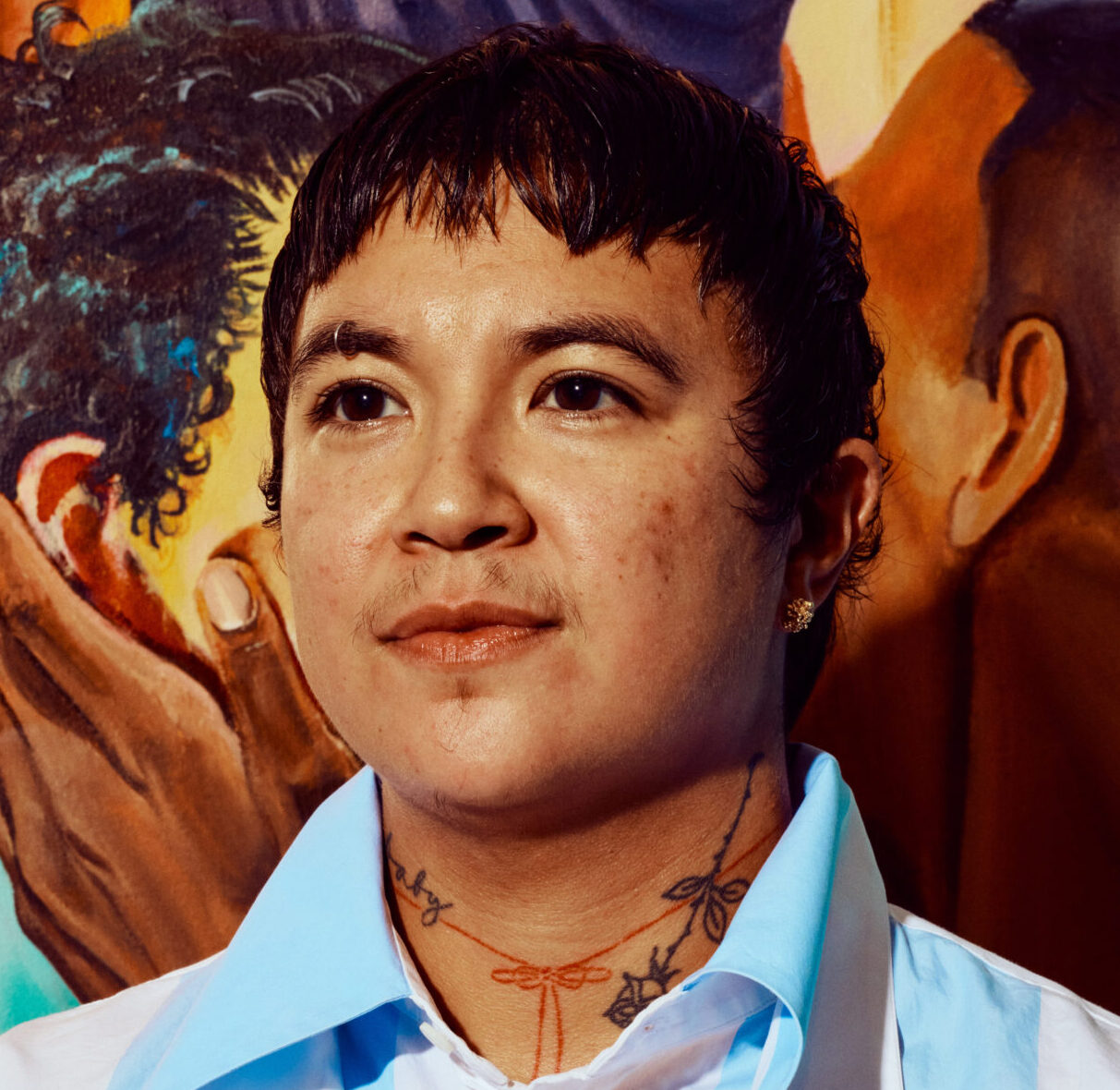
Silver Iocovozzi is the chef-owner of the Filipinx restaurant Neng Jr.’s in Asheville, North Carolina. Neng Jr. has been nominated for a James Beard Award and recognized as one of the Best Restaurants by The New York Times and Bon Appétit. A second-generation Filipinx and Southern native, Silver blends Filipinx flavors with Southern barbecue traditions. A 2023 Time100 Next honoree, Silver has cooked in cities worldwide and has held roles at acclaimed spots including Asheville’s Buxton Hall Barbecue and Palm Heights Grand Cayman.
Can you tell us a little bit about yourself and your journey—how did you go from growing up in the South to becoming a chef and opening Neng Jr.’s?
My parents met in the 80s in Japan and Yokohama. My dad was a Marine, and my mom moved from the Philippines to work in Japan. They met, fell in love, and then I was created. I was born on Parris Island, a military base in South Carolina. We moved to a small town called Apex, North Carolina—their town is “the peak of good living.” It’s a suburban haven now, but when I grew up there, it was very rural, and there wasn’t much to do. I spent a lot of time walking on the side of the road and exploring abandoned houses––I was really curious about everything, and the slowness helped me be curious.
My mom was missing home when we moved, trying to recreate these dishes that she didn’t know how to cook, because it’s very common for Filipino families to have a maid who cooks for them. My grandma was the person who did that, as well as their maid. So, she watched a lot of cooking shows and was really inspired to cook for herself. I grew up watching her cook, and that had a huge impact. I was her number one fan, and I still am. There’s a huge painting of my mom in the dining room of my restaurant that a friend of mine painted.
Overall, I had a second-gen lens growing up in the American South. It’s a very specific place; it has its own reputation, but I’m really grateful to have grown up there.
Your food fuses Filipinx cuisine with Southern barbecue. How did you come to see the connection between those two culinary worlds?
I grew up visiting the Philippines when we could. There was a place that we would visit outside of Manila, called Batangas. They call it the province where there isn’t a lot going on, and it’s very country—their version of country. There’s not a lot of gas cooking. It’s all by fire. That was the first time I saw a pig get sacrificed—I don’t know why I said sacrifice, but that’s what it felt like. It was a whole ceremony. I felt like I was getting embedded into this experience as someone who is Filipino, but doesn’t live there, and I’m clearly of the American wealth variety. They were all looking at me while they were sacrificing this pig. They ended up cooking it in many different ways.
A couple of years later, I was working at a barbecue restaurant. I think it was easy for me to find where the circles overlapped in the Venn diagram, because there’s not a big difference between eastern North Carolina barbecue and Filipino lechon—the difference being the style in which you cook it. Lechon is more of a spit roast, and usually it’s a smaller suckling pig. The pigs that we were smoking there were massive, massive pigs that were just butterflied.
I have this crazy obsession with barbecue. American cuisine really starts with the South, and with the history of chattel slavery. When we are able to think about history as a tool, it’s important for us to figure out what our connection is to that. I was cooking so much of other people’s food, and I think it takes a while to understand, as a chef, what is going to bring you the most purpose. What I found is that my lineage gives me the most purpose, because I have so much connection to it, cosmically and in my soul. Working at the barbecue restaurant just helped me fuse all of the things that were Southern. I probably won’t ever work at that kind of barbecue restaurant again. It was just really American, but I also am not separate from being American.
Food and Wine Magazine has described your food as a “deeply personal exercise in storytelling.” What stories are you trying to tell with each dish?
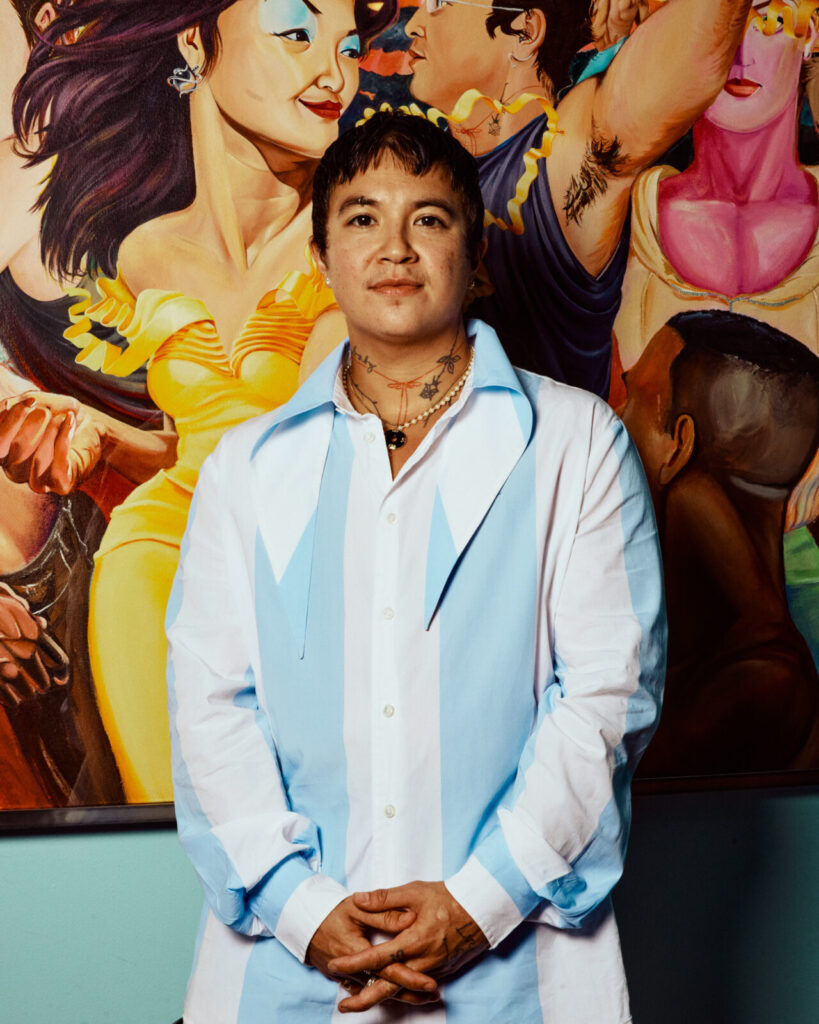
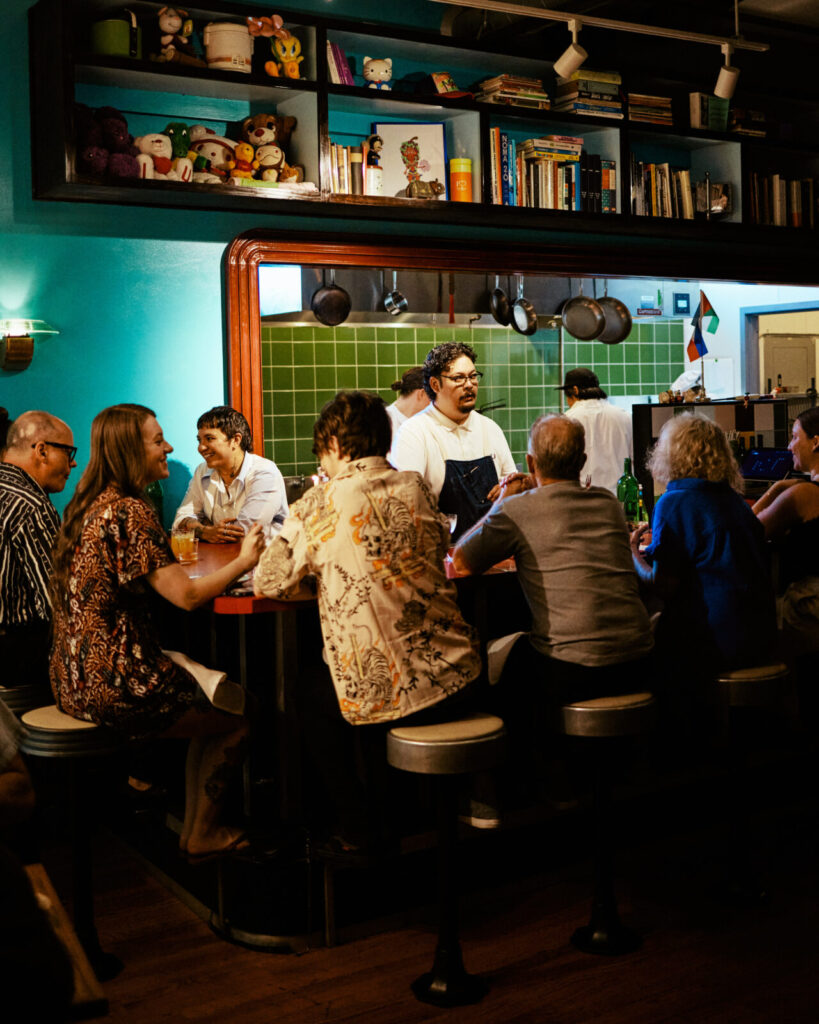
I’m going to talk about the painting in the dining room. The painting is a portrait of my mother in the center, and she’s wearing this yellow dress, and there’s a ribbon that’s kind of unraveling; I’m in the background holding the top of it. When I was talking to the artist, he had this idea of a dress and me holding the ribbon. The ribbon is symbolic of passing on my mother’s story and her cooking ability. The restaurant is a lot of different love stories. It’s my love story with my mother. It’s my mom and dad’s story of how they met. It’s my love story with my husband. The creation of the restaurant itself is this dedication to them and the people who helped it come to fruition, because it was such a difficult project.
How has your identity shaped your approach to both your culinary art and your role as a leader?
I wish I could say that they could be separate. I wish identity were separate from what I do, but it’s part of everything I do.
I was thinking about this over the past week, because I went to a symposium called the MAD Symposium, which is a global foodways multi-day gathering of sorts, with back-to-back MAD talks, similar to TED talks. I had some pretty rough moments as an audience member. There were these conversations between heroes of mine, people I really respect, and still respect–Thomas Keller and René Redzepi–two icons in food, and they were really flippant about saying, “We can do whatever we want.” It was a great conversation, but it was a conversation between two white cis men. How much can you really learn from a conversation between two white cis men when they have all of the privilege in the world? I have a lot of respect for both of them, but I think we need to create spaces where people can relate to these speakers.
My identity pushed me into a corner of having to act politically because of who I am. I don’t have a choice but to understand that I have these rights that I need to give to others. I need to give other people the comfort of a protected space and a protected work environment, regardless of how they identify or whatever reality they choose for themselves.
Identity is inherent in everything I do. Identity is part of the food that I cook and the dishes I create. It’s not easy for me to come up with ideas about what a dish is, because I’m often looking inward to what feels meaningful for me—that’s where I’ve found the most success. When you are able to articulate what the story is, it’s inherently political, and it’s not without the things that I’ve had to go through as a chef or as a trans person in the South.
I cooked for a while as a woman in kitchens. That was just so difficult and also a different experience than being a trans person. As a trans person opening a restaurant, I did maybe one interview relating to my identity, and then I realized I don’t want people to think I’m pigeon-holing my identity as a means for success, to catapult myself because of my marginalized identity. I would rather just be known for how good a chef I am, not because I’m this trans chef.
When you live in a small town, people feel like they know you. It’s been an interesting experience as a successful chef. It’s interesting to walk alongside some of my neighbors who misgender me. It’s a little different for me if I’ve known you before, and I can have a very tiny, tiny margin of understanding. But it makes it difficult to be a leader when you have neighbors who misgender you and do not understand who you are. They don’t see me. There are many facets to that.
Could you describe your creative process—how do you go about creating a novel dish?
I like to think about a lot of things when I cook—probably too many. I do a lot of reference-based cooking. I’ve always said I’m a “stuff” person—I love diving into magazines, cookbooks, and old techniques. I went to culinary school, so I have a lot of reverence for traditional French technique.
When I think about a dish, I often start with what my farmers tell me is coming in that week. That becomes the base, and then I ask myself, “What makes sense on the menu?”
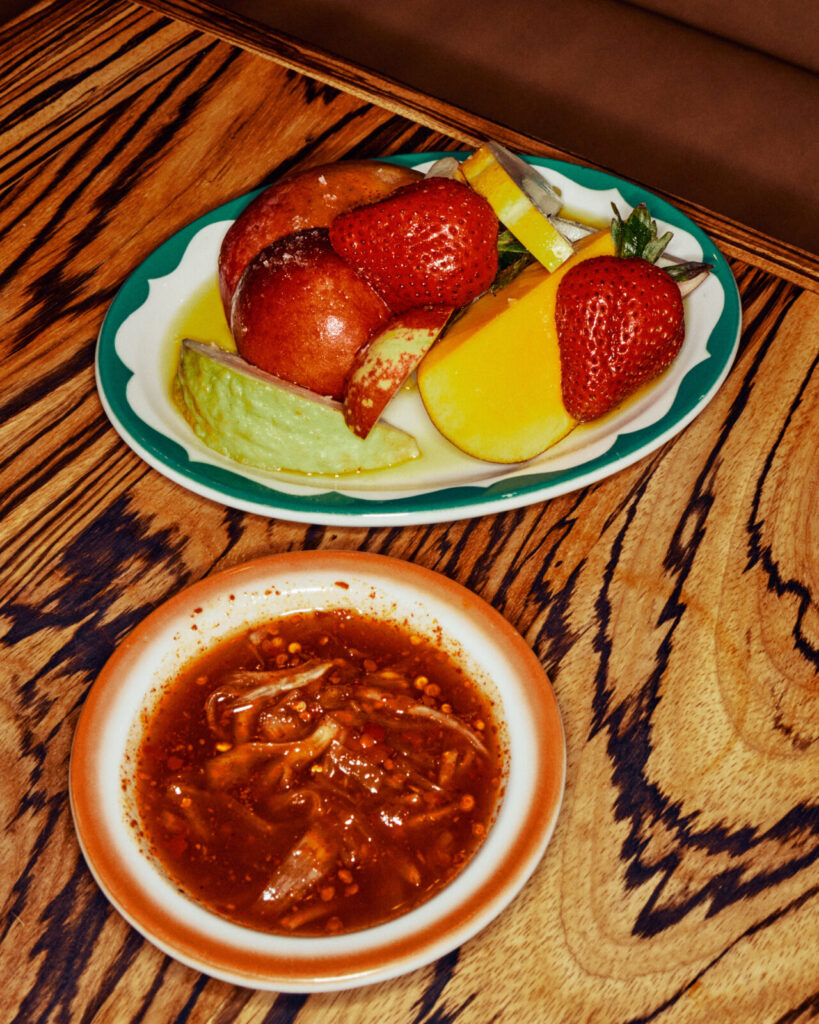
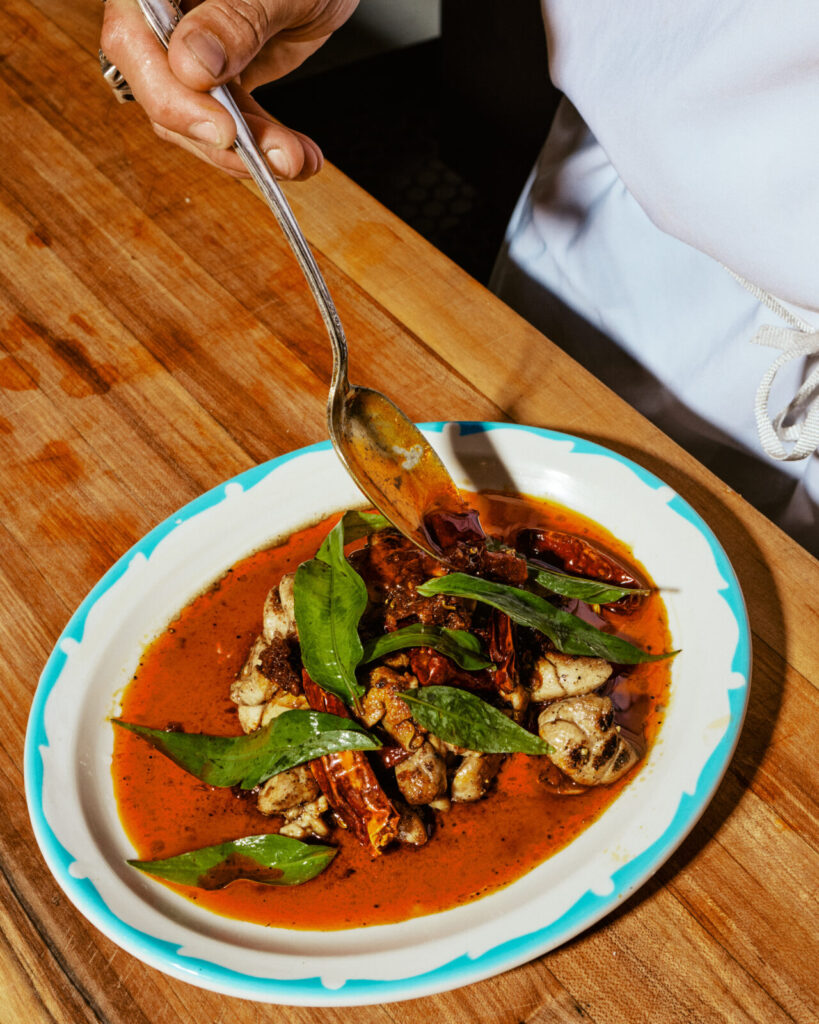
Take laing, for example—a dish made with dried taro leaves stewed in coconut milk, Thai chili, and fermented shrimp paste. Traditionally, it’s cooked down into this thick, dark green mixture—it almost looks like artichoke dip, but with really spicy Thai chili and fermented shrimp paste.
For a long time, even up to now, I’ve been cooking my version à la minute, without the shrimp paste, because I love the brightness of fresh greens. And as anyone who’s cooked greens knows, if you cook them for too long, they kind of disappear and shrink, and shrink and shrink. At the beginning of the restaurant, I was like, “Oh, I’m spending so much money on everything. Let me try to just cook this all à la minute, so the greens don’t disappear.” But the more I think about the dish, the more I come back to its roots. I went to the Philippines recently, and we drove through all of the streets and saw taro leaves hanging outside sari-sari stores to dry. And I was like, “Oh, that’s brilliant.” This helped me remember the taste of the traditional version of the dish.
Now, I’ve been getting all these collard greens from my farmer, Evan Tender, and I’ve been thinking about how I might smoke and dry them—kind of creating a 2.0 version of something that’s really close to my heart. When I’m creating a dish, I use my experiences as references… It’s really all about memory for me.
Do you see food as an effective medium for political expression?
1,000%, because it’s history. You can’t deny a root that is indigenous to its soil. That is my biggest drive right now: food being political. I recently read a food essay on an ingredient called freekeh, a Palestinian wheat berry that was discovered because the Israeli occupation was burning their crops. It became this amazing by-product, even though it was supposed to be destroyed.
When I’m thinking about cooking, I’m thinking about what I have the easiest access to in Appalachia. There are so many things—it’s such fruitful soil, and there are so many amazing farmers. I pulled my focus into what’s going to benefit the farmer, what’s closest to me, and how can I make that a Filipino dish? It feels like the hardest puzzle on Earth.
There’s this Hmong family that has been growing rice here, and they’re the only people growing rice in western North Carolina, and I try to take their simple ingredient and not manipulate it too much, because good cooking, to me, just focuses on the simplicity of the few things that you want to include. As a person who has been a maximalist for most of my life, I’ve tried dialing it back and focusing in, and working on quality versus quantity.
I’ll try my best to get some ingredients that sing to the cuisine, too, and that indigenize the menu. There have been times when I have tried to take out fish sauce or a fermented shrimp paste to appease the general public. Now, I try not to trim the cuisine itself to make it more palatable for everyone. I’m trying to diffuse my willingness or need to please everyone. I’ve let go of a lot of that, but I think the last thing I have to let go of is the food part. I don’t want to make it hard for people to eat at the restaurant, but I do think there’s a certain level of trimming down that you just can’t do, because it changes what the food really is.