

Since 1952, the path to practicing law in the United States has been straightforward: attend an American Bar Association (ABA)-accredited law school, graduate, pass the bar exam, and step into a courtroom. In 2026, the Texas Supreme Court overturned this precedent, removing the requirement that law students must graduate from an ABA-accredited law school to sit for the Texas bar exam.
“It is unusual, or, more precisely, has not happened in this way any time in the last several decades,” stated Barry Currier, former managing director of accreditation and legal education at the ABA. This deviation from conventional accreditation—the formal approval process conducted by the ABA that evaluates and certifies law schools as meeting a specific national standard—has sparked intense debate nationally. Supporters praise the decision, believing it opens the door to greater legal education and services accessibility, while critics argue that educational standards and portability—the ability to practice across state lines—of lawyers are subject to a political attack.
As states like Florida, Ohio, and Tennessee follow Texas’s lead, the future of the legal profession remains uncertain. How will the rules governing the legal world shift? Perhaps more importantly, who will gain power—and who will be left behind—as this critical profession is transformed?
Historically, the pathways to the legal profession were far less standardized than they are today. “Think back to the first half of the 19th century. Abraham Lincoln was a bar examiner. He never went to law school, but he would just be [a lawyer],” said Professor Lael Weinberger of the Antonin Scalia Law School. “If you wanted to become a lawyer…local courts would appoint local attorneys to be an examiner.” Legal training, during this time, was informal, decentralized, and deeply localized. There was a greater reliance on apprenticeship and connections rather than institutionalized credentials.
That informality, however, began to foster anxiety within the legal profession. “At the end of the 19th century, a lot of lawyers thought: ‘We really are concerned that there are going to be too many people becoming lawyers. We want to formalize bar exams. We want to formalize standards for legal education…and we’d rather have more restrictive paths to the legal profession,’” Weinberger explained.
Currier, additionally, underscored that the ABA emerged as an “apolitical organization.” The ABA’s nonpartisan nature enabled the organization to primarily focus on establishing standards that law schools should meet, incentivizing states to delegate accreditation authority to the ABA. By the early 1980s, every U.S. state accepted a degree from an ABA-accredited law school as meeting the educational requirements to sit for the respective state’s bar exam.
The ABA’s rise as the central arbiter of legal education created an unusual institutional tension, as it remains a voluntary, professional association rather than a public regulatory body. The only “real” power they possess in overseeing entry to the legal field is through the Council of the Section of Legal Education and Admissions to the Bar, which oversees the approval process for law schools, sets curriculum and faculty standards and ensures educational quality. Even so, the authority is derived from informal state consensus. By drawing the distinction of who has constitutional power over legal regulation, it becomes clear that there was always the possibility for contestation over ABA authority.
Karen Sloan, a journalist covering law for Thomson Reuters, explained, “The part of the ABA that oversees law schools is a little bit separate from the larger organization. The larger association doesn’t have any real control over how lawyers are licensed and how they are regulated. That’s all up to individual states.” The 10th Amendment of the U.S. Constitution, which reserves powers not granted to the federal government to the states, includes the power to regulate law school accreditation. From this perspective, the 2026 Texas Supreme Court decision is not unjustly stripping authority from the ABA; rather, they are acting within their constitutional authority to determine who possesses the power of accreditation.
The decision incited strong backlash within the legal community. Sloan, however, stated that the decision “sounds a little more dramatic than what is actually happening right now.…Instead of abiding by ABA rules for accreditation, Texas has now come out with their own list of law schools that are state-approved, and if you graduated from there, you can take the Texas bar exam.”
Currently, the list of accredited law schools by the Texas Supreme Court is identical to that of the ABA. The negligible change to which law school graduates are allowed to sit for the Texas bar exam prompted critics to view the Texas decision as highly politicized.
The Texas Supreme Court’s decision was framed as an effort to ensure that Texas law schools adopt “simple, objective, and ideologically neutral criteria.” Nevertheless, many critics view this reasoning as a politically motivated response to the ABA’s Diversity, Equity, and Inclusion (DEI) initiatives. The specific DEI initiatives in contention are ABA Standard 206, which required schools to take “concrete action” to create a diverse and inclusive educational environment, and Standard 303, which has an impact on law school curriculum planning, requiring ABA-accredited law schools to “educate law students on bias, cross-cultural competency, and racism.”
Professor Robert Steinbuch of the William H. Bowen School of Law stated, “The ABA had been trying to impose some certainly political standards. Maybe you could agree or not agree with them, but they had a very strong DEI requirement, and they said we don’t care what the state law is. If you want our accreditation, you have to meet these standards.” In states where DEI mandates conflict with state law, ABA accreditation begins to transform from professional oversight to political leverage.
Aside from the stance on DEI initiatives, the ABA has continued to stray away from their original nonpartisan nature. “The ABA came out with a number of statements that were critical of the Trump administration’s adherence to the rule of law,” said Dean Austen Parrish of U.C. Irvine’s School of Law. He added that the organization also criticized the administration’s positions on “judicial review,” specifically on approving judges that the Trump administration nominated.
William Rath, a newly licensed attorney in the District of Columbia and a legal content creator on TikTok, criticized the decision: “It’s definitely a culture war thing. The reason they’re doing this is because it’s political, and they want to have control.”
Echoing Rath’s concerns, Parrish outlined a plausible future. “It could be the case that you have states like Florida, Texas, Ohio, Tennessee, that band together and say, ‘Here’s the other accreditor that we’re going to recognize,’” Parrish explained. Such a realignment, he warned, could foster greater polarization, producing parallel systems that implicitly signal ideological affiliation. “Now you have a situation where this is the conservative accreditation, and this is the progressive accreditation, rather than what’s been in existence for years.”
The politically fragmented accreditation process would erode what Parrish described as a system “designed to ensure a baseline of quality” for legal education. In this scenario, political polarization would transform a professional qualification standard into another weapon within the broader war of American politics.
Another concern is the effect of the decision on the portability of lawyers. Parrish specifically pointed to universities, such as UT Austin, where students are likely to want to practice outside of Texas. “Almost 40% of their students are from out of state, a number of international students, many of their students are going to the large markets,” Parrish noted. For UT Austin and similar schools, breaking from ABA standards would be “much more costly or much more dangerous” because it would mean losing the reputation of being a law school that could send students to larger legal markets outside of Texas.
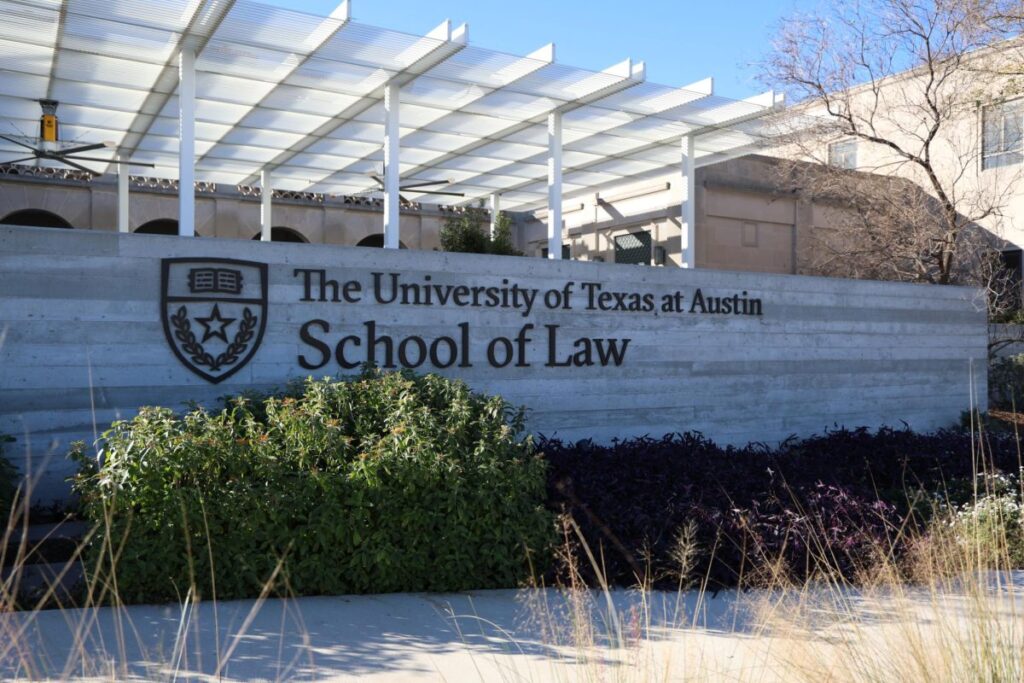
Parrish reflects on his own experience as a lawyer, and how portability permitted flexibility when making spontaneous decisions about his personal life. “I went to law school in New York. If you had asked me if I was going to be in Los Angeles two years before, I’d be like no way. But after I met my wife and checked out Los Angeles, I am appreciative of the portability.” Although the Texas Supreme Court stated that the decision “intends to preserve the portability of Texas law-school degrees into other states,” Parrish remains skeptical that such assurances will withstand.
In addition to geographic accessibility, financial accessibility to legal education remains in question as well. “It is not necessarily true that unaccredited schools that are not ABA-accredited are that much cheaper,” Parrish stated. Looking at states, like California, with longstanding alternative pathways, “there’s very little evidence that the California market… has solved the access to justice issues.” This further fuels critics’ argument that the Texas decision was a mechanism to infuse a specific ideology into a historically nonpartisan field.
Beyond questions of political motives and legal access, the debate returns to the fundamental goal of the ABA: quality control of legal education. If states were to advance their interest in promulgating their own set of legal education standards, a two-tiered system legal system—one state-based and one nationally-based—would prevail. This, according to Currier, would be “horrible for legal education.” A decentralized system would ultimately result in the quality of legal services looking vastly different based on geographic location.
To control the quality of education, Currier posits that a “coordinated reform” should occur. “States should work with other states to establish a competitor, or to work with the council to get things straightened out,” Currier said. A national standard would protect the quality of legal services for all Americans.
While some experts question whether the Texas decision will deliver better standards, others fear that hysteria is hyperbolic. Steinbuch believes that those concerned with Texas isolating its legal education system from the rest of the country misunderstand the political and institutional realities. In response to the concern of threatened portability for Texas law schools, Steinbuch argued that “there’s no way the University of Texas or the legislature will [limit] its graduates to practicing [law] only in Texas. That will never happen.”
Steinbuch continued by framing the Texas Supreme Court decision as a structural correction, not an educational rollback. Every State Supreme Court has always had authority over bar admission rules, he noted, and the Texas decision is an “effort to change the overall system.” Steinbuch applauded this effort to break the “monopolistic” single accreditor.
For now, the negative impact of the Texas decision remains mainly theoretical, leaving the conventional ABA pathway to becoming a lawyer intact. “If I had to guess, the ABA is here to stay and that the pressure will be to change the actual standards,” said Parrish. “I think blowing up the existing system is a bad idea and would harm lots of people, students, and states, so I’m cautiously optimistic that it won’t happen.”
Yet, even amid the uncertainty, some see potential for the profession to confront long-standing inequities. Weinberger reflected, “To the extent that we have developments that are favorable to access to justice, this is actually a great opportunity. This decision might prompt a conversation about what we want the legal profession to look like as it goes forward.” If the partisan tendency to point fingers can be overcome, the American legal system can be reshaped to meaningfully dismantle barriers to entry and participation.
As Texas and other states begin to deliberate on the new standards of law school accreditation, the repercussions transcend mere technical debates. It has become a battle over who holds the keys to one of society’s most powerful professions, how that power is wielded, and whether the doors to legal education will open for the many or remain closed to the few. Only time will tell if this was purely a political maneuver or a reform capable of reshaping the legal profession for the better.